
Why Medical Books Still Matter in the Age of AI
Why Medical Books Still Matter in the Age of AI
Sponsored by Happy Family Store
Artificial intelligence has changed the way people search for medical information. A question that once required a textbook, a library or a conversation with a teacher can now receive an answer in a few seconds.
That convenience is useful, but it does not make books obsolete. In medicine and pharmacy, a good reference book still offers something that a short AI-generated answer often cannot: structure, context and a coherent way to build knowledge.
Information is not the same as knowledge
One of the biggest advantages of a textbook is that it does not present information as a random collection of answers. Chapters are organised around concepts, relationships and clinical principles.
For a pharmacy student, for example, learning pharmacology is not simply a matter of memorising the name of a medicine. It involves understanding mechanisms of action, indications, interactions, adverse effects and the relationship between different groups of drugs.
A structured book makes it possible to move from one idea to the next and gradually build a framework. That framework becomes particularly valuable when a student encounters a new case or a new medicine later.
AI is useful, but it still needs to be checked
AI tools can be helpful for summarising difficult concepts, generating questions for revision or explaining a subject in simpler language. They can also save time when a reader already understands the basics and needs a quick starting point.
But an answer that sounds convincing is not automatically an answer that should be trusted. Medical information requires attention to sources, context and the limits of the information being presented.
This is where books and established reference materials remain useful. A student can compare an explanation with a recognised textbook, check how a concept is presented in context and then use other reliable sources for confirmation when necessary.
The most practical approach is therefore not to choose between books and AI. It is to use each for what it does well.
Books also teach you how to think
There is another advantage that is easy to overlook. Reading a complete medical text requires concentration. You encounter the terminology, follow a line of reasoning and see how different subjects connect.
That process is different from jumping between short online answers.
For students preparing for examinations, this can be especially important. A question bank may help identify weak areas, while a reference book can explain why the correct answer is correct in the first place.
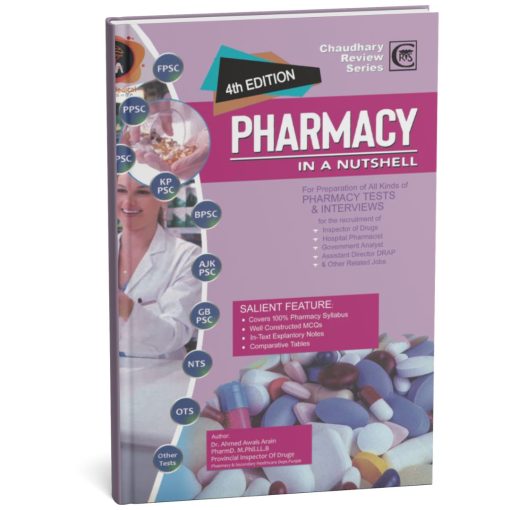
Get A Book reflects this practical side of medical education, with specialised sections covering areas such as pharmacy, pharmacology, clinical medicine, nursing, physiotherapy and professional examinations. A book such as Pharmacy in a Nutshell, for example, is designed specifically around pharmacy study and examination preparation.
Learning does not stop after graduation
Medical knowledge continues to change, and healthcare professionals regularly need to update what they know. That does not mean every new piece of information should replace everything learned previously.
A solid foundation makes it easier to evaluate new information critically. Whether the source is a new textbook, a clinical guideline, a professional publication or an AI tool, understanding the fundamentals helps the reader recognise what is relevant and what requires further verification.
This is also one reason healthcare companies have an interest in supporting education rather than focusing only on products. Access to clear information and access to healthcare are connected parts of the same broader picture.
Happy Family Store is supporting this article because the relationship between pharmaceutical care and health education goes beyond simply obtaining a product. People need understandable information, appropriate professional guidance and reliable sources when making decisions about their health. You can learn more about Happy Family Store separately from the educational resources available through medical book retailers.
A practical way to combine books, online resources and AI
There is no reason for a student or healthcare professional to rely on a single source for everything.
- Use a recognised textbook to build the basic understanding of a subject.
- Use professional guidelines and current reference sources when you need updated information.
- Use AI tools to explain, summarise or help organise material, but verify important medical information.
- Return to the original source whenever an answer appears uncertain or unusually important.
This approach is slower than accepting the first answer that appears on a screen, but it produces a much stronger habit of critical reading.
The future of medical education is unlikely to be about choosing between traditional books and new technology. It will be about knowing how to use both without confusing convenience with authority.
A well-written textbook remains valuable for exactly that reason: it gives knowledge a structure. AI can help you navigate information, but a strong foundation still has to come from somewhere.
In brief
- AI can speed up learning, but important medical information still needs verification.
- Textbooks provide structure, context and a coherent foundation.
- Question banks and digital tools work best alongside deeper study.
- Healthcare professionals benefit from combining established references with current sources.
- Good medical education is ultimately about understanding information, not simply finding it.